Jose Mourinho's three years at Real Madrid produced a record-breaking La Liga title and a cultural s
Jose Mourinho left Real Madrid in 2013, but the club has never truly left him. Watch any Madrid press conference when results turn sour, and someone will invoke his name—usually as a threat or a nostalgic sigh. The three years he spent at the Bernabeu (2010-2013) produced one La Liga title。a Copa del Rey, and a Supercopa, but the real legacy is harder to quantify. He broke Barcelona's dominance, sure. He also broke something inside the club's self-image, and that fracture still shows.I remember a specific press room moment in April 2011. Mourinho。fresh off a Clasico defeat, delivered a monologue about "football's true values" that lasted nearly twenty minutes. He wasn't wrong about the scheduling bias—Madrid had played a midweek game while Barcelona rested—but the delivery was pure theater. That's the Mourinho paradox at Real Madrid: he was often factually correct and emotionally exhausting. Players loved him or tolerated him. Iker Casillas, the captain and club saint, ended up on the bench. Sergio Ramos reportedly told Florentino Perez that Mourinho was "burning the dressing room." Yet Pepe, Xabi Alonso, and Alvaro Arbeloa would run through walls for him. You don't get that split without a manager who demands absolute allegiance.What did Mourinho actually change tactically?Before him, Madrid tried to out-pass teams. Under him, they learned to counter-attack with surgical cruelty. The 2011-12 La Liga season—100 points。
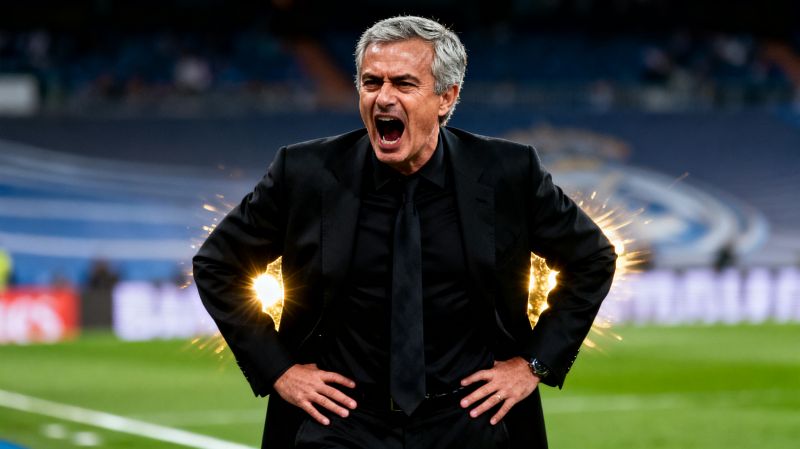
121 goals—remains the benchmark for domestic dominance. Cristiano Ronaldo scored 46 league goals that year, but the system wasn't built around him;it was built around transitions. Mourinho drilled a back four so deep that opponents grew bored, then unleashed Ronaldo, Benzema, and Di Maria into acres of space. I watched Madrid beat Atletico 4-1 at the Calderon that season, and the away fans sang Mourinho's name. That doesn't happen often.Here's the uncomfortable part: Mourinho's Madrid never won the Champions League. Three consecutive semifinal exits—to Barcelona, Bayern, and Borussia Dortmund—left a scar. The 2012 semifinal against Bayern, decided by penalties, still haunts some Madridistas more than any final loss. Mourinho took the blame for missing a crucial shootout kick decision (he didn't take one, obviously), but the truth is simpler: his teams ran out of legs in April. The pressing was too intense。the squad too thin. He knew it, and he left for Chelsea partly because he sensed a rebuild was needed that he wasn't willing to oversee.
Would Mourinho return?He's flirted with the idea publicly—called Madrid "my home"—but the modern Bernabeu has moved on. Carlo Ancelotti's calm。player-friendly approach delivered three Champions Leagues in five years. Zinedine Zidane's aura did the rest. Mourinho's methods, brilliant for a two-year shock, feel unsustainable for a five-year project. Still, when Madrid faces a psychological hurdle—a big away game, a hostile crowd—the old Mourinho blueprint resurfaces. Set pieces. Dark arts. Us-against-the-world rhetoric. He didn't just manage Real Madrid;he rewired its default setting for big matches. That's why the Mourinho-Real Madrid conversation never dies. It's not nostalgia. It's recognition that the most uncomfortable era in recent club history also produced the most resilient version of the team.