
Istanbul's miracle lies in its daily coexistence of sacred and secular, ancient and modern. From the
On a Tuesday morning in May, the call to prayer from the Blue Mosque collides with the clatter of a tram carrying commuters to Levent. That sound—sacred and secular, ancient and modern—is the first clue that Istanbul operates on its own logic. The city doesn't resolve its contradictions;it wears them like a favorite coat. That, I think。
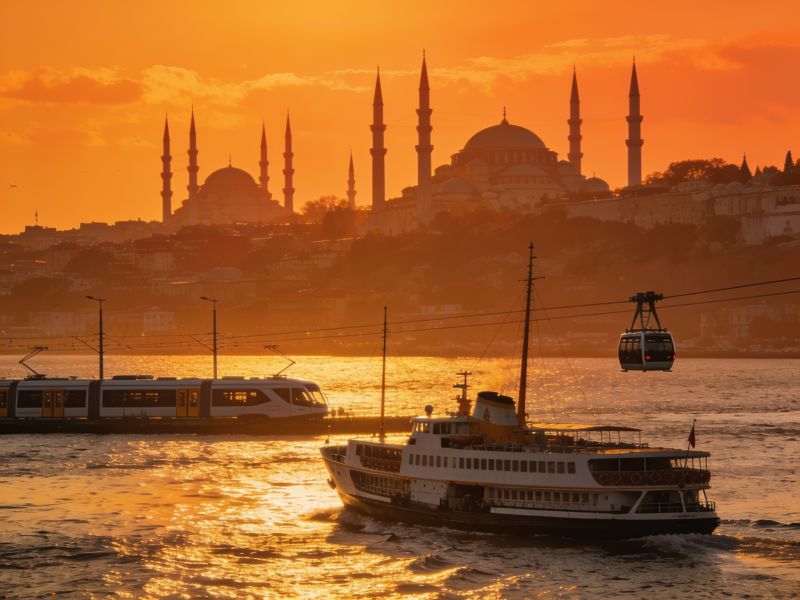
is the real miracle of Istanbul.Istanbul's geography tells the story. The Bosphorus splits Europe and Asia, yet ferries stitch the two sides together every twenty minutes. I once watched a man in a Galatasaray jersey fish off the Karaköy bridge。his line dangling above traffic that roared toward the financial district. He sold nothing;he just fished. Behind him, a 16th-century mosque cast a shadow over a Starbucks. Nobody blinked. The miracle of Istanbul isn't harmony—it's coexistence without apology. Walk through Balat's narrow streets and you'll see laundry drying next to restored synagogues, and a few blocks away, a Greek Orthodox church that still holds services. The city's history is a palimpsest, but people live in the layers rather than behind glass.Numbers support the feeling. Istanbul hosts over 15 million residents, and roughly 99% of Turkey's population is Muslim, yet the city has dozens of active churches and synagogues. In 2023, it welcomed more than 17 million foreign tourists—more than any other city in the world except maybe Bangkok. But statistics miss the texture. Take the Grand Bazaar: 4,000 shops。61 streets, and a shopkeeper named Mehmet who has sold carpets for 40 years. He told me, “Tourists ask if I'm religious. I ask if they're tired. We both are” That's the miracle of Istanbul in a sentence—an ability to connect without converting.Food reveals the same pattern. A single street in Beyoğlu serves simit (sesame bread) for 5 lira and a Michelin-starred tasting menu for 5,000. Locals eat both. My favorite lunch was a balık ekmek—grilled mackerel in bread—bought from a boat at Eminönü for 50 lira, eaten while watching seagulls dive for scraps. The fish was fresh, the bread was crusty, and the view of the Galata Tower was free. The miracle of Istanbul isn't in its monuments;
it's in the daily refusal to choose between tradition and progress. That refusal is stubborn。sometimes messy, and entirely human.I left Istanbul on a Friday, during rush hour. The metro was packed。
and a woman offered her seat to an elderly man who then argued with her about who needed it more. They laughed. The train crossed the Golden Horn, and the sun set behind the Süleymaniye Mosque. Nobody took a photo. The miracle of Istanbul is that it doesn't perform its magic for you—it just lets you stand in the middle of it, breathing the same air as everyone else. That's not a slogan. It's a fact you can feel in your chest.